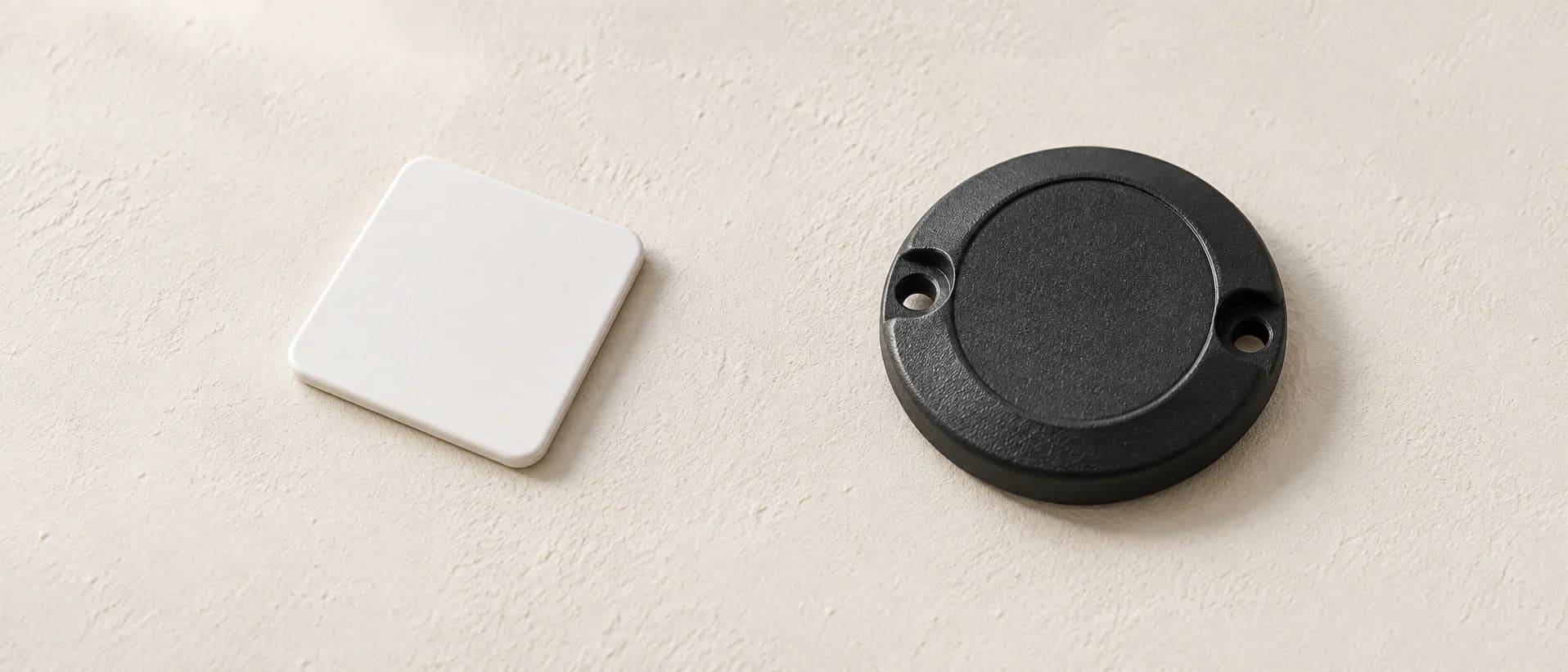
NFC and RFID can both be used to verify that a security patrol device visited a physical checkpoint. The main difference is that NFC is a short-range type of RFID designed for close interaction between compatible devices, while “RFID” is a broader term that covers several radio-frequency identification technologies and operating ranges.
For a security company, the more useful question is not which acronym is universally better. It is which patrol device, checkpoint type and monitoring workflow fit the site's operating requirements.
What is NFC in a guard patrol system?
Near Field Communication, or NFC, is a short-range wireless technology. In a patrol workflow, a guard brings an NFC-compatible device close to an NFC checkpoint installed at a defined location. A successful scan can create a patrol event that identifies the device, checkpoint, date and time.
The short reading distance encourages a deliberate interaction with the physical point. This makes NFC useful when an operation needs a record that a compatible device reached a specific gate, room, perimeter section or other named location.
Onguard's OG-66 Patrol Radio uses NFC checkpoints for patrol verification. The same device also supports cellular push-to-talk, GPS location context, time-and-attendance workflows and connected monitoring.
What is RFID in a guard patrol system?
Radio-Frequency Identification, or RFID, is the broader family of technologies that uses radio waves to identify tags or points. Different RFID systems can use different frequencies, read distances and device designs.
In a guard-tour workflow, a compatible patrol reader scans an RFID point installed at a required patrol location. The resulting record can then be reviewed against the patrol route or schedule.
Onguard's MKIII Patrol Reader uses RFID patrol points for structured guard-tour operations. Its Multi Guard feature supports up to six guards simultaneously, each with an individually configured route and break time.
Is NFC the same as RFID?
NFC is a type of RFID, but the terms should not be used as though every NFC and RFID product works together. A checkpoint must be compatible with the specific patrol device and system in use.
In Onguard's current product range, the distinction is straightforward:
- OG-66 uses NFC patrol points.
- MKIII uses RFID patrol points.
These are separate product-specific implementations. An operation should not assume that a checkpoint intended for one device can be scanned by the other.
NFC vs RFID for security patrols: quick comparison
NFC patrol workflow: The guard brings a compatible device close to an NFC checkpoint. In Onguard's range, the OG-66 uses this method and combines it with cellular push-to-talk, GPS location context, attendance and connected monitoring.
RFID patrol workflow: The guard uses a compatible patrol reader to scan an RFID point. In Onguard's range, the MKIII uses this method for structured guard tours and supports web-based monitoring and Multi Guard.
Neither method replaces GPS, and the two Onguard checkpoint systems should not be assumed to be interchangeable.
The comparison is about workflow and product fit, not a universal ranking. Read distance, checkpoint construction and data handling depend on the system selected.
Why use physical patrol checkpoints instead of GPS alone?
GPS and physical checkpoint scans answer different questions.
GPS can provide wider location or movement context for a connected device. A successful NFC or RFID scan records an interaction with a named physical checkpoint. If a supervisor needs to review whether a guard's device reached a specific plant room, entrance or perimeter point, the checkpoint record is generally more specific.
GPS accuracy can also vary with the environment, device conditions and signal visibility. A checkpoint scan should still not be exaggerated: it records the compatible device's interaction with the point, not every action the guard performed at that location.
For a step-by-step explanation of the wider workflow, read How Does a Guard Patrol Monitoring System Work?.
Which technology is better for guard patrols?
Neither NFC nor RFID is inherently better for every patrol operation. Choose the complete system that best matches the work to be done.
NFC with the OG-66 may suit an operation that wants checkpoint verification alongside cellular push-to-talk, GPS location context, attendance workflows and connected device monitoring in one field device.
RFID with the MKIII may suit an operation focused on a structured guard-tour workflow using a dedicated patrol reader. MKIII patrol settings can be configured remotely, and patrol activity and reporting can be monitored through the Onguard web interface.
The decision should also account for the number of guards, route structure, site conditions, communication needs, connectivity and reporting requirements.
What should you ask before choosing NFC or RFID patrol points?
Before selecting a patrol system, ask:
- Which patrol device will read the checkpoints?
- Are the device and checkpoint type confirmed to be compatible?
- Where will each checkpoint be installed?
- What scan record will supervisors be able to review?
- Must patrol information be available during the shift or only afterwards?
- What happens when an expected point is missed or recorded late?
- Does the guard also need push-to-talk communication or attendance functions?
- Is network coverage suitable for any connected features?
- How will damaged, missing or relocated points be replaced and documented?
- Who will configure routes, review exceptions and maintain the system?
These questions keep the buying decision connected to an operating procedure rather than a single technical specification.
How should patrol checkpoints be placed?
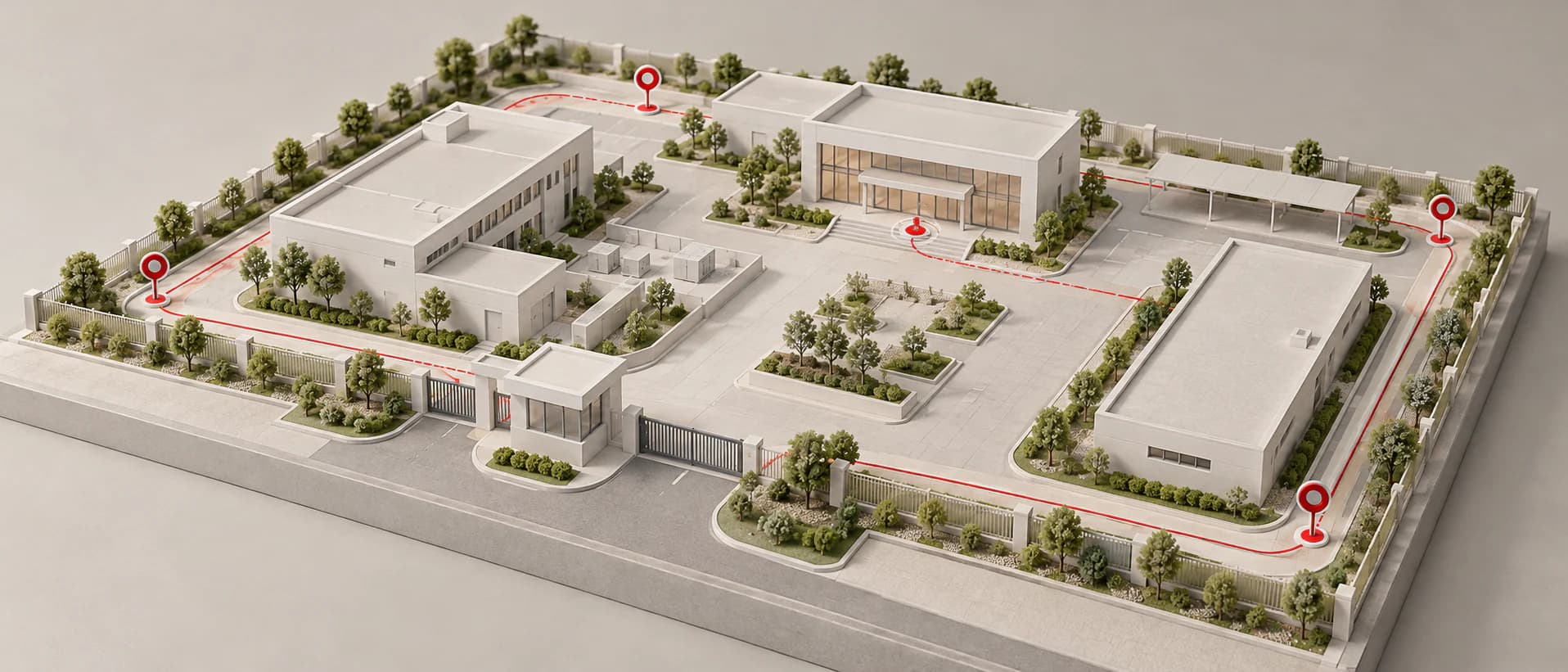
Place checkpoints where a recorded visit supports a genuine security task. Examples may include controlled entrances, perimeter sections, equipment rooms, fire-safety areas or other locations identified by the site's risk assessment and patrol procedure.
Avoid adding points simply to increase the number of scans. A route should be practical to complete, and every checkpoint should have a clear purpose. The operation should also consider safe access, weather exposure, tampering risk and whether the point can be identified and replaced consistently.
After installation, test the complete route with the actual patrol device. Confirm that every point can be scanned, is named correctly in the platform and appears in the intended patrol or report.
How are NFC and RFID patrol records monitored?
The scan is only the first part of the workflow. The patrol system must store or transmit the event and present it in a form that supervisors can use.
Depending on the device and configuration, supervisors may review completed patrol points, exceptions, device status and other operational information. Connected functions depend on suitable connectivity. The security operation should define which events need immediate attention, who is responsible for responding and how follow-up actions will be recorded.
A clear exception process is more valuable than collecting data without a response plan. Patrol records can support supervision and client reporting, but they do not replace human review.
Frequently asked questions
Can an NFC phone scan every patrol checkpoint?
No. Even if a phone supports NFC, it does not follow that it is authorised, configured or technically compatible with a particular patrol system. Use the device and checkpoints specified by the system provider.
Can the OG-66 scan MKIII RFID points?
Onguard specifies NFC patrol points for the OG-66 and RFID patrol points for the MKIII. Treat them as separate product-specific checkpoint systems rather than interchangeable points.
Do NFC or RFID patrol points need batteries?
Many passive checkpoint tags do not require their own battery, but construction and power requirements depend on the selected product. Confirm the specification for the exact checkpoint being installed.
Can a checkpoint scan confirm a guard's identity?
A scan identifies the compatible device and checkpoint information recorded by the system. Whether it can be associated with a particular guard depends on the operation's device allocation, login, attendance and patrol procedures.
Do patrol checkpoints work without internet access?
Offline behaviour depends on the device and system. Some patrol devices can store events for later transfer, while live monitoring and connected alerts require suitable connectivity. Confirm this requirement before deployment.
Choose the patrol workflow before the checkpoint technology
NFC and RFID both provide a practical way to record visits to defined patrol points. The right choice depends on the complete workflow: the guard's device, route design, communication needs, connectivity, monitoring process and reporting requirements.
If you are comparing checkpoint technologies for one site or a wider security operation, talk to Onguard about the patrol process you need to support.