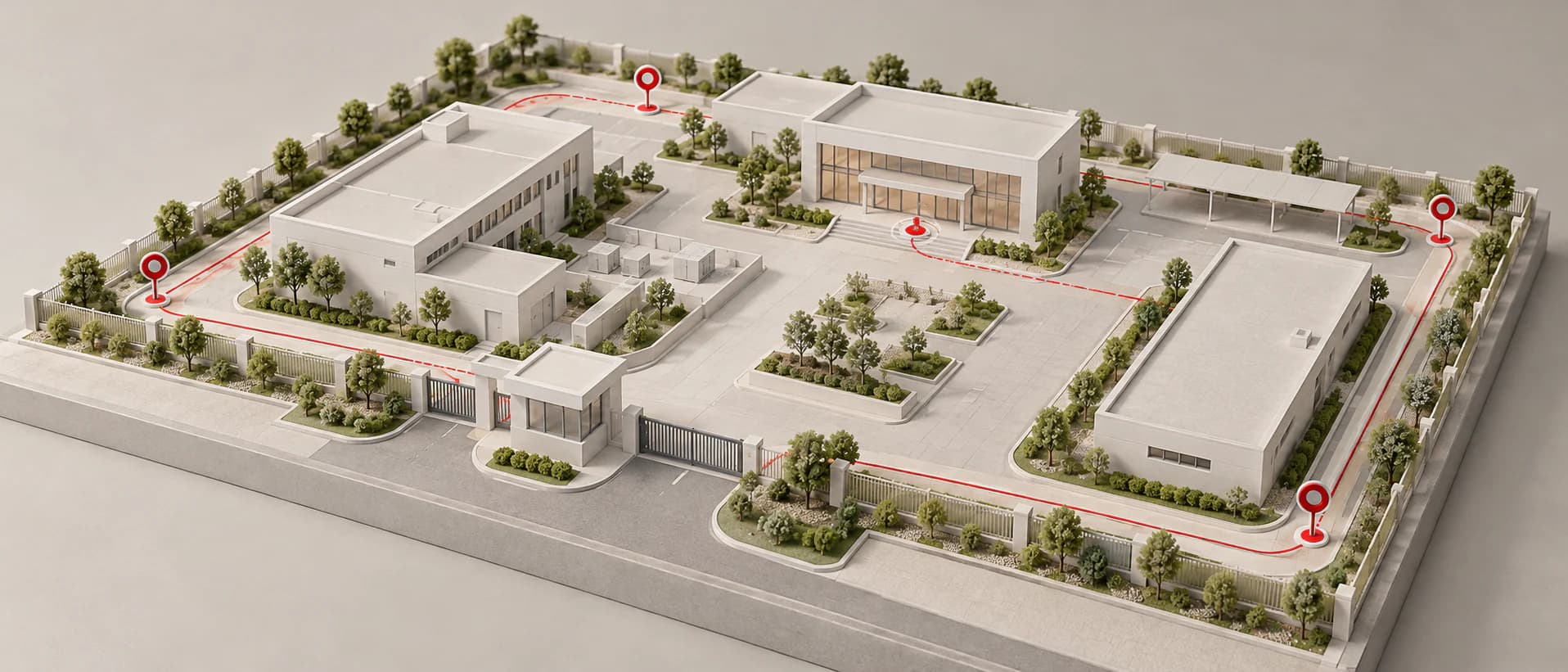
A guard patrol monitoring system records a guard's activity at defined checkpoints and makes those records available for supervision and reporting. In a typical setup, a guard carries a patrol device, scans NFC or RFID points along a configured route, and sends each recorded event to a monitoring platform. Supervisors can then review completed, missed, late or unusual patrol activity.
The system does not replace a guard, a supervisor or a site procedure. Its purpose is to create a more consistent operational record of what happened during a patrol.
How does guard patrol monitoring work?
Guard patrol monitoring usually works in five steps:
- A patrol route is configured. The operation defines which checkpoints should be visited and, where required, the expected patrol times or sequence.
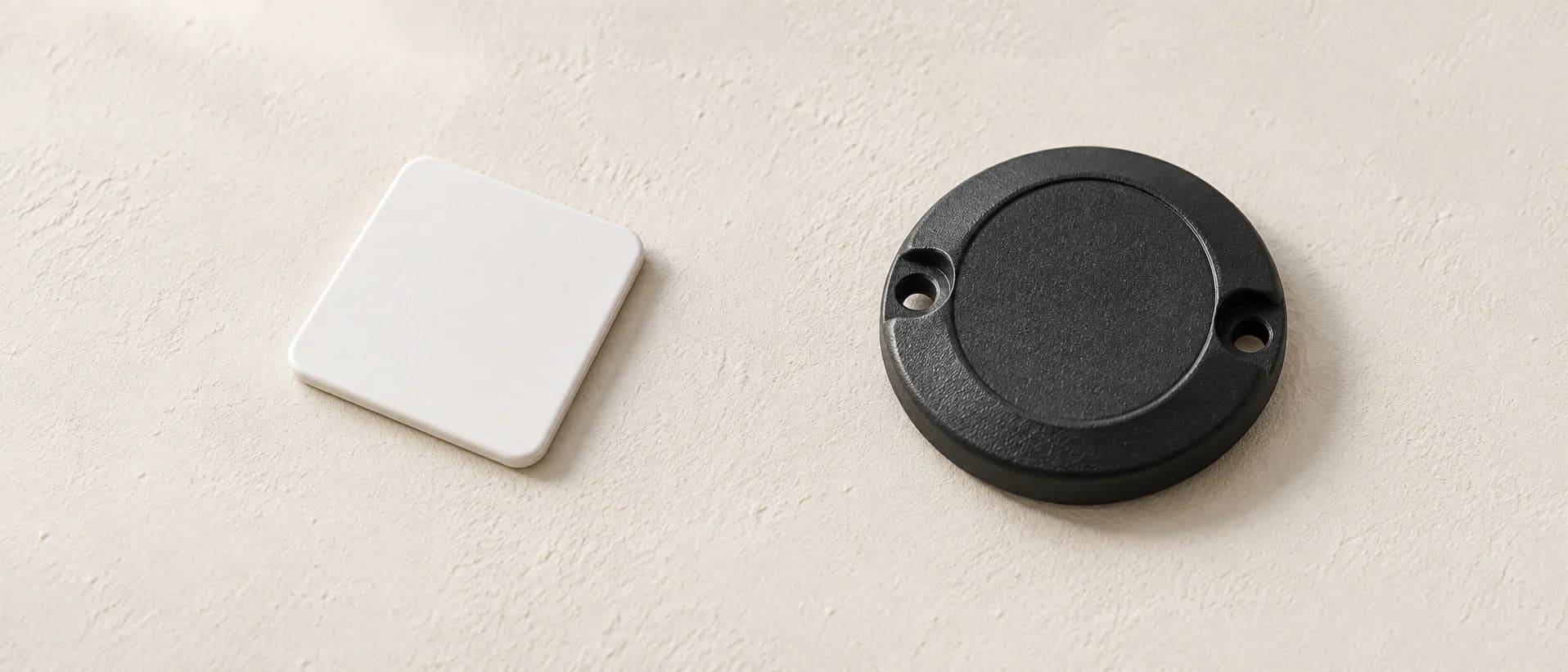
- Checkpoints are installed. NFC or RFID patrol points are placed at locations that a guard must physically visit, such as a gate, plant room or perimeter section.
- The guard records each visit. The guard scans the relevant checkpoint with a compatible patrol device.
- The patrol event is stored or transmitted. The record can include the device, checkpoint, date and time. Connected systems may send this information to a monitoring platform during the shift, subject to network availability.
- Supervisors review activity and exceptions. The control room or operations team can compare recorded events with the configured patrol and investigate missed, late or unexpected activity.
This creates a traceable workflow from a planned patrol to a recorded checkpoint event and, when necessary, a supervisor's response.
What does a guard patrol system record?
The exact information depends on the device and configuration, but a patrol record commonly identifies:
- the patrol device;
- the checkpoint that was scanned;
- the date and time of the scan;
- the patrol route or schedule associated with the event; and
- whether expected activity was recorded within the configured rules.
Some connected devices can also provide GPS location context, device status, battery information, alerts, communication functions or time-and-attendance records. These are related operational signals, but they should not all be treated as the same kind of evidence.
For example, GPS can show broader device location or movement context. A successful NFC or RFID scan creates a record that the compatible device reached and read a specific physical checkpoint. That is why a checkpoint scan is normally more useful for verifying a defined patrol point than GPS alone.
What equipment is needed for electronic guard patrol monitoring?
A practical patrol-monitoring setup has four core parts:
- A patrol device used by the guard to scan points or record activity.
- Physical checkpoints installed at locations included in the patrol route.
- A monitoring platform where authorised users can review patrol events, device information and configured alerts.
- An operating procedure that explains patrol timing, exception handling, escalation and reporting responsibilities.
Depending on the operation, the same setup may also include cellular push-to-talk communication, panic or duress processes, guard alertness prompts, attendance workflows and downloadable reports.
Technology is only one part of the system. Checkpoint placement, patrol design, staff training, network conditions and control-room responsibilities determine whether the recorded data is useful.
What is the difference between NFC, RFID and GPS patrol monitoring?
NFC and RFID checkpoints both support physical patrol verification, while GPS provides wider location context.
- NFC patrol verification: A compatible device reads a nearby NFC checkpoint. Onguard's OG-66 Patrol Radio uses NFC points for its patrol workflows.
- RFID patrol verification: A compatible reader scans an RFID patrol point. Onguard's MKIII Patrol Reader uses RFID points for structured guard-tour operations.
- GPS location context: GPS can help supervisors understand the wider location or movement of a connected device. It does not by itself create the same record as scanning a named physical checkpoint.
The appropriate method depends on the site and the question the operation needs to answer. If the requirement is to record a visit to a specific door, gate or equipment area, a physical checkpoint is usually the clearer verification method. If the requirement is broader device-location context, GPS may provide supporting information.
Is guard patrol monitoring real time?
A connected guard patrol system can make recorded events and configured alerts available to a monitoring platform during a shift, provided the device has suitable connectivity. “Real time” should not be interpreted as a guarantee of uninterrupted visibility: network coverage, device status and system configuration can affect when information becomes available.
Real-time monitoring is most useful when the operation has already decided:
- which exceptions require attention;
- who receives each alert;
- how quickly the recipient should respond;
- what the recipient should do next; and
- how the action will be recorded.
Without a response procedure, an alert is only another piece of data. For a fuller explanation, read The Importance of Real-Time Guard Monitoring.
Can a patrol system prove that a guard completed a patrol?
A patrol system can provide records showing that a compatible device scanned specified checkpoints at recorded times. Those records can help a supervisor review whether expected patrol activity was recorded.
They do not prove everything that happened between checkpoints, guarantee that every task was performed correctly or replace an incident investigation. The records should be reviewed alongside the site's procedure, exception notes, communications and any other relevant information.
This distinction matters when reporting to clients. Accurate language is stronger than an exaggerated claim: a system can document recorded patrol events and help identify exceptions, but it cannot remove every operational risk.
What should supervisors monitor during a shift?
Supervisors should focus on information that supports a defined action. Depending on the system and procedure, that may include:
- completed and missed patrol points;
- late or out-of-sequence activity;
- configured panic, duress or operational alerts;
- device online or offline status;
- battery state;
- guard acknowledgements for alertness monitoring; and
- relevant attendance or communication records.
The aim is not to watch every data point continuously. It is to make important exceptions visible and assign responsibility for reviewing them.
How should a security company choose a patrol monitoring system?
Start with the operating requirement, not the product name. Ask:
- Which locations must guards visit, and how should those visits be verified?
- Are patrols scheduled, flexible or different for each guard?
- Does the site need communication as well as checkpoint verification?
- Is suitable cellular coverage available where connected features will be used?
- Which events should trigger an alert, and who will respond?
- What information must be available during and after a shift?
- How many guards, sites, routes and shifts must the system support?
- What training, setup and ongoing support will the team need?
Also distinguish patrol monitoring from rostering. A rostering tool plans who should work at a location and time; patrol monitoring records activity during the shift. Many security operations need both, but they answer different questions.
For a broader buying guide, see Best PTT Radio and Patrol Tech for Security Companies.
How does Onguard support guard patrol monitoring?
Onguard provides different tools for different patrol requirements in South African security operations:
- The OG-66 Patrol Radio combines cellular push-to-talk, NFC patrol verification, GPS location context, time-and-attendance workflows and connected monitoring. Its dual-SIM setup can switch between available cellular networks according to availability and signal strength.
- The MKIII Patrol Reader supports structured guard-tour operations using RFID patrol points. Its Multi Guard feature supports up to six guards simultaneously, each with an individually configured route and break time.
- Stay Awake supports scheduled guard acknowledgements and missed-response alerts. It is an alertness-monitoring function, not a substitute for checkpoint verification, and is also available on the OG-66.
The right setup depends on the patrol procedure, site conditions, communication needs and records the operation needs to review. Not every site requires every function.
Frequently asked questions
What is a guard patrol monitoring system?
It is a combination of patrol hardware, checkpoints, software and operating procedures used to record and review guard activity along configured routes.
How are missed patrols detected?
The monitoring platform compares recorded checkpoint events with the configured patrol rules. If an expected event is not recorded as configured, the system can make the exception available for review or trigger a configured alert.
Does a guard patrol system replace supervision?
No. It gives supervisors structured records and exception information. People still need to review the information, investigate concerns and follow the site's response procedure.
Can guard patrol monitoring work without cellular coverage?
That depends on the product. Some devices can store patrol records for later transfer, while connected monitoring and communication functions require suitable connectivity. Confirm the required offline and connectivity behaviour before choosing a system.
Is GPS enough to verify a patrol?
GPS provides useful wider location context, but a physical NFC or RFID checkpoint scan creates a more specific record of a visit to a named patrol point.
Turn patrol activity into useful operational records
A guard patrol monitoring system works best when routes, checkpoints, alerts and response responsibilities are clearly defined. The technology can then help a security operation answer practical questions: Which points were recorded? When were they visited? Which exceptions need attention? What information is available for review after the shift?
If you are planning or reviewing patrol monitoring across your security sites, talk to Onguard about your routes, communication needs and reporting requirements.