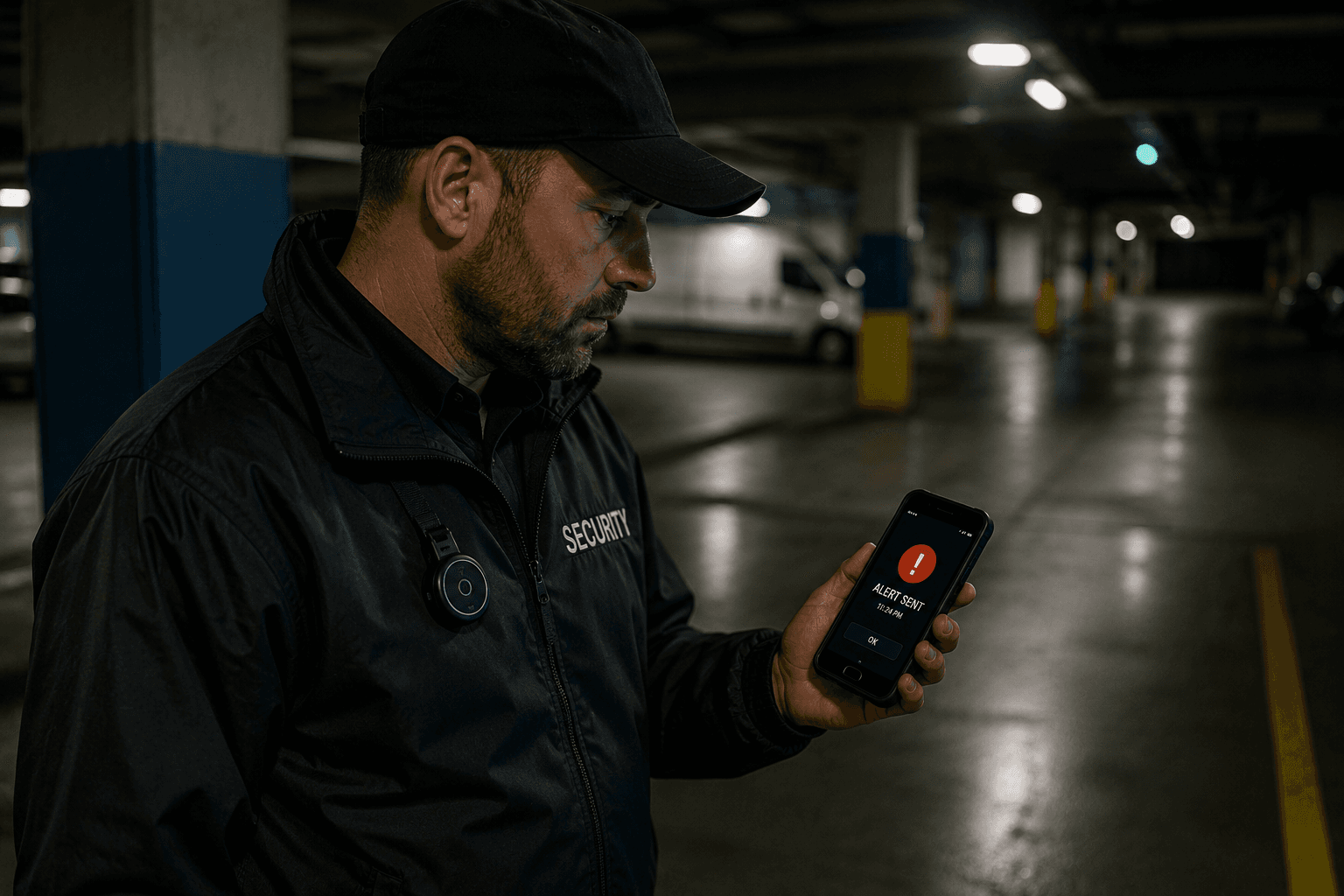
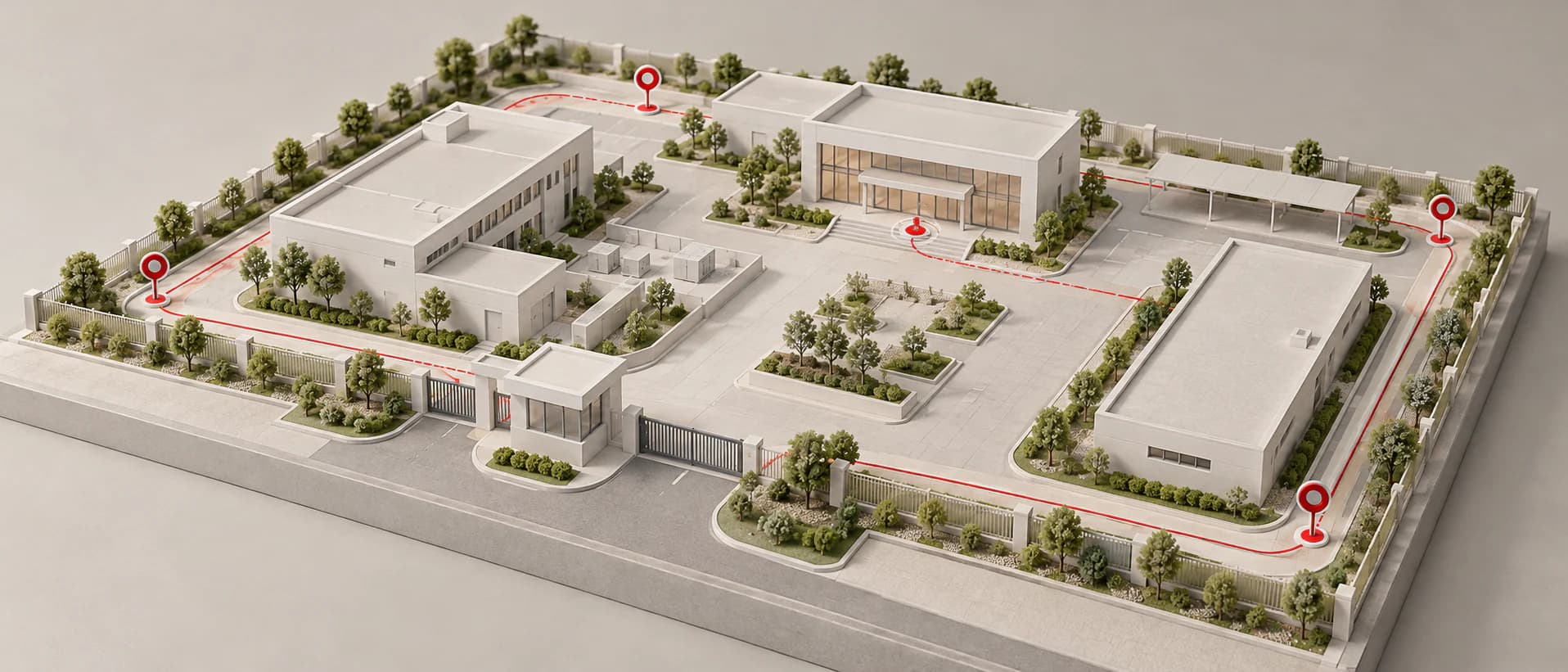
A lone worker is someone who works without close or direct supervision for part or all of their work. A lone-worker system is the combination of procedures, communication methods and monitoring tools used to maintain agreed contact, identify missed check-ins or alerts, and support an appropriate response when something goes wrong.
For security operations, the technology is only one part of the arrangement. The procedure, the people responsible for responding, the site's coverage and the training given to guards all matter.
What is a lone worker?
Lone working can occur whenever a person works away from close or direct supervision. In a security context, that may include a guard working alone at a site, patrol personnel covering isolated areas, employees working after normal hours, or mobile personnel working away from a supervisor.
Working alone does not mean that every person faces the same level of risk. The relevant risks depend on the job, the environment, the time of day, the availability of assistance and the controls already in place.
The UK Health and Safety Executive (HSE) uses the description “work by themselves without close or direct supervision” in its lone-working guidance. This is useful operational guidance, not a statutory South African definition.
What is a lone-worker system?
A lone-worker system is an operational arrangement, not simply a device. Depending on the work, it may combine a risk assessment, instructions and training, agreed communication methods, scheduled contact or check-ins, alerts, escalation procedures, supervision and appropriate technology.
The aim is to make the procedure clear: how the worker can contact a supervisor, how the supervisor keeps in contact, what information is available if an alert occurs, and who takes the next step. A handset, panic button or location feature can support that arrangement, but none alone replaces a well-understood response process.
Lone working and health and safety in South Africa
South Africa's Occupational Health and Safety Act 85 of 1993 places a general duty on employers to provide and maintain, as far as reasonably practicable, a working environment that is safe and without risk to employees' health. The appropriate controls depend on the work, hazards and circumstances involved.
This general framework does not mean that every lone worker must carry a particular device, use GPS or have a panic button. It also does not establish a separate general “lone-worker law” requiring a specific system. Organisations should assess their own work and hazards, then establish controls and procedures that are appropriate to them. This article is practical operational information, not legal advice.
Communication and scheduled check-ins
When a worker is alone, agreed communication can help the worker contact colleagues or supervisors and help the operation maintain contact at planned intervals. The method might be a radio, telephone, in-person supervision or another approach that fits the site and its coverage conditions.
Scheduled check-ins can create a clear point at which a missed response needs review. A missed check-in is an exception for operational follow-up; it does not by itself prove that an emergency has occurred. The procedure should define who receives the exception, how they attempt contact and what they do next.
The HSE's UK guidance recommends a risk-based approach to supervision, keeping in touch, monitoring and emergency arrangements. While it is not South African law, it provides useful practical questions for designing lone-worker procedures, including whether the workers understand the system and whether the arrangements are tested.
Alerts, panic functions and response procedures
An alert mechanism can give a worker a way to raise attention when they need assistance. Its usefulness depends on the operating procedure around it: who receives the alert, what information they can review, how they make contact, who is responsible for responding and what happens if the worker cannot respond.
For example, a plan may need to account for site access, nearby support, poor mobile coverage, after-hours contacts and the distinction between an alert requiring review and a confirmed emergency. A panic or distress function does not guarantee a response time, automatic police or medical dispatch, or connectivity in every location.
Location context and patrol records
Location information can provide useful context for a supervisor, but it is not proof that a worker is safe or that a patrol was completed. Similarly, a check-in confirms only that a response was made at that point in time; it does not demonstrate continuous alertness throughout a shift.
Patrol verification is a separate function. It records interaction with configured checkpoint technology, such as an NFC or RFID point. A useful lone-worker procedure should be clear about what each record means and should not treat location context, a voice exchange or a checkpoint scan as interchangeable evidence.
Why technology alone is not enough
The appropriate level of supervision and control should reflect the risks involved. Useful factors to consider include the type of work, site environment, working hours, communication coverage, access to assistance, worker experience and training, likely hazards, emergency procedures and the frequency of agreed contact.
Technology supports the process only when people know how to use it and the operation knows how to respond to what it records. Training, clear responsibilities, regular testing and review are therefore as important as choosing a device.
What should a lone-worker system help you answer?
Before adopting or reviewing a system, an operation can ask:
- How does the worker contact a supervisor, and how does the supervisor contact the worker?
- Are scheduled check-ins needed, and what happens when one is missed?
- How can the worker raise an alarm, and what information is available to the recipient?
- Who is responsible for responding to an alert or missed response?
- What happens where mobile coverage is poor or the worker cannot respond?
- Are staff trained on the procedure and the equipment they carry?
- How are planned patrol records, location context and communication records kept distinct?
- How often are the procedure, contacts and escalation arrangements tested?
These questions do not have one universal answer. They should be answered for the site, the work and the people involved.
Where Onguard technology may fit
Onguard tools can support parts of a lone-worker arrangement where they fit the site's procedure. The OG-66 Patrol Radio supports cellular push-to-talk, GPS location context, NFC patrol verification and connected monitoring workflows. It also has a physical panic button, while a specially designated distress patrol point can be scanned to send a silent alarm. Cellular communication remains dependent on supported network connectivity and local conditions.
Stay Awake is a standalone guard alertness-monitoring device, and its functionality is also available on the OG-66. It uses scheduled prompts and guard acknowledgement; a missed response can create an alert for operational follow-up. It also supports reporting, remote configuration and one-point patrol operation.
These products do not constitute a complete legal or safety programme, and they should not be assumed to create one automatic workflow. For a wider explanation of how communication, patrol verification, alerts and reporting can be considered alongside one another, see Patrol Management Software South Africa. To discuss whether a current product fits a particular operational requirement, contact Onguard.