Security technology is easiest to understand when it is demonstrated in the environment where it will actually be used. That was the purpose of an Onguard system onboarding and live demonstration held at the Bidvest Fidelity Vissershok site.
The session was led by Robby, an Onguard trainer. It covered two TYT OG-66 radios, 17 NFC patrol points, the monitoring dashboard, control-room procedures, patrol scheduling, push-to-talk communication, GPS tracking and automated reporting.
This report explains what was demonstrated and what the session teaches about implementing a connected security patrol system successfully.
What was the purpose of the training session?
The session had three practical goals:
- Make sure the radios and NFC points were installed and used correctly.
- Teach management and controllers how to monitor devices, process alerts and review patrols.
- Build a realistic implementation plan so guards could learn the system in stages.
The approach was deliberately operational. Instead of treating the OG-66 as only a radio, the demonstration showed how communication, guard safety, patrol accountability and control-room decisions connect in one workflow.
What equipment was demonstrated?
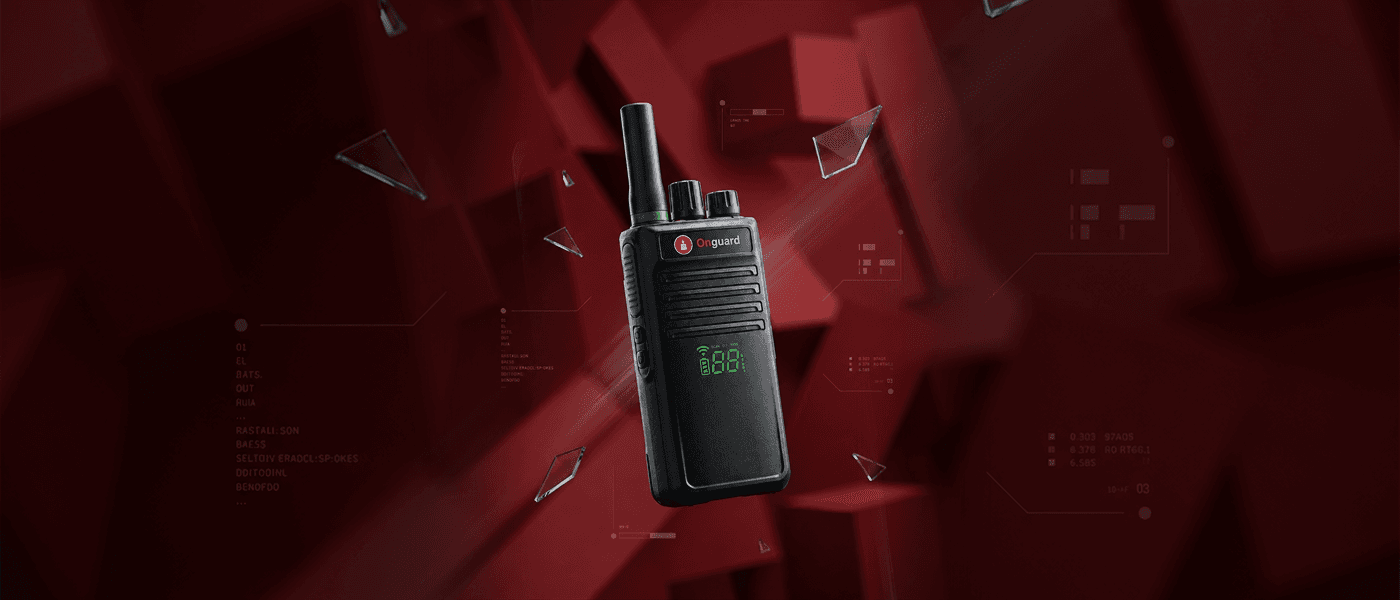
Two TYT OG-66 radios were available: one for the control room and one for the site patrol. Seventeen NFC points were provided for installation around the site.
The radio uses a secured SIM card inside the battery compartment and must be used with its antenna attached. Removing the antenna can make network connectivity unreliable. A full battery generally supports a working shift, with performance depending on usage and network conditions. The recommended practice is to keep radios on charging cradles in the guard hut between patrols.
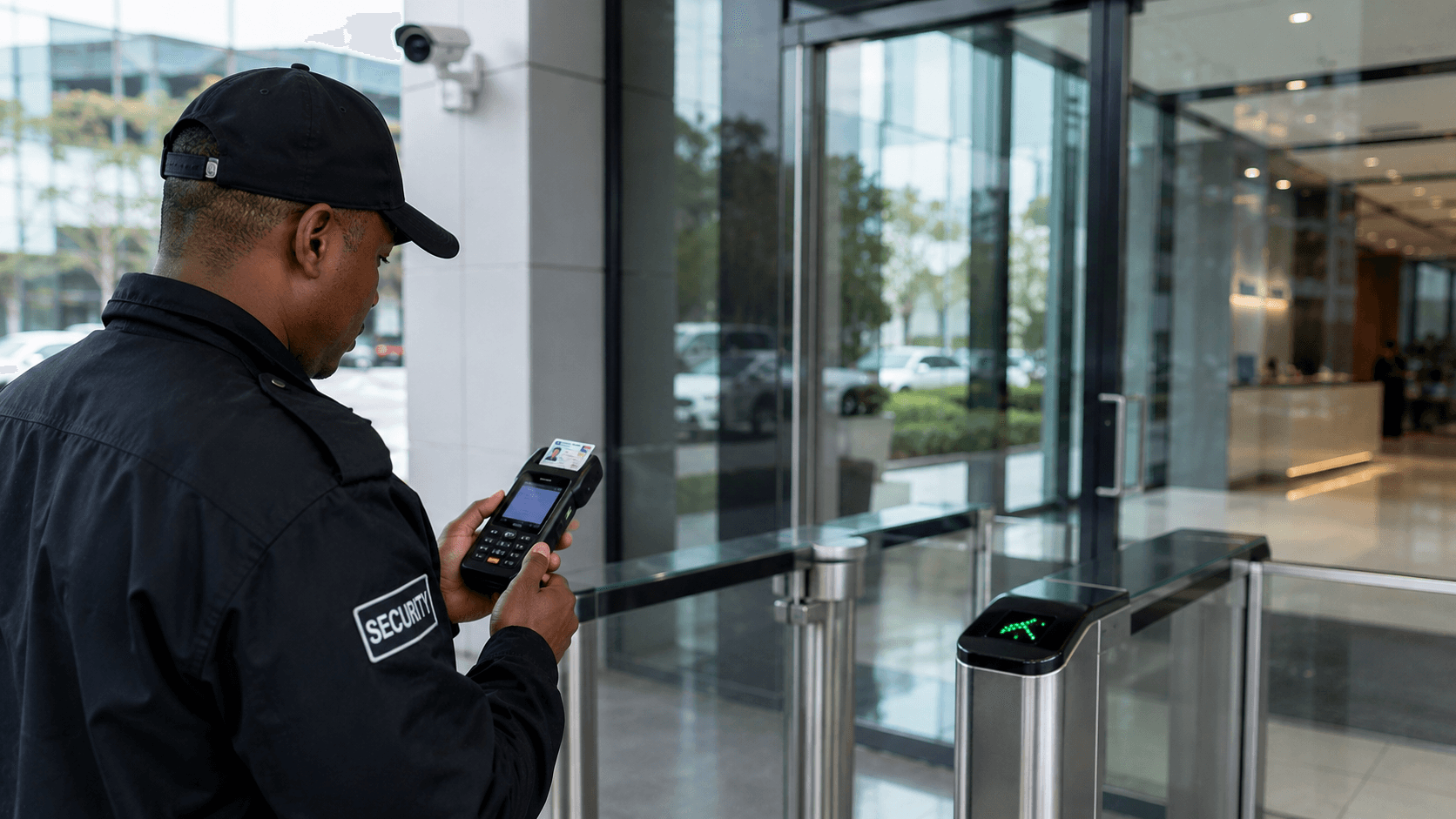
The NFC points are scanned by touching the back of the radio to the tag. A short sound confirms a successful scan. The points do not display their location, so each one must be given a meaningful name in the system, such as “Front Gate”, “Warehouse” or “Perimeter”. NFC points should not be mounted directly on metal; a wooden spacer can be used where necessary.
How does the Onguard monitoring dashboard work?
The monitoring dashboard gives controllers a current view of the security operation. It shows outstanding alerts, sites, devices and online or offline status.
Selecting a device opens more detail, including:
- Last communication time and online status
- Battery percentage
- Approximate GPS location
- Current volume level
- Upcoming or active patrols
- Device activity history
An offline status is intentionally delayed for several minutes so that a brief signal interruption does not create a false alarm. This is an important operational lesson: monitoring systems need sensible thresholds, not just maximum sensitivity.
What should a controller do when an alert appears?
During the demonstration, alert management was taught as a five-step process:
1. Acknowledge
The controller selects Process to stop the audible alarm and open the alert details.
2. Investigate
The controller checks the alert type, device location and recent activity. Possible causes include a panic activation, missed patrol, patrol not started or device offline condition.
3. Take action
The controller contacts the guard by radio or phone. If more time is needed, the alert can be placed on hold with an explanatory note.
4. Document
The controller records what was found and what action was taken. Notes are timestamped and linked to the logged-in user, then included in reporting.
5. Close
Once the situation is resolved, the controller adds the final note and selects Complete.
This process matters because an alert is not a complete incident record on its own. The investigation and response must be recorded as well. Alerts left on hold for too long can escalate to management, while empty notes leave no useful explanation for later review.
How are guard patrols verified?
Patrol verification begins with correctly naming and positioning the NFC points. Points are then grouped into routes and assigned to schedules.
When a guard scans a point, the system records:
- Which checkpoint was visited
- Which radio performed the scan
- The date and time of the scan
- Whether the scan matched the active route
This creates objective evidence of patrol activity. It is more useful than relying only on a radio call in which a guard says a patrol was completed.
The training also highlighted the importance of realistic timing. Inter-point delays must allow enough time to walk between checkpoints. Robby recommended walking the route with a stopwatch before setting the delays. If timings are too short, guards can receive “arrived too early” errors and fail a patrol despite moving correctly.
The Patrol Not Started alert was presented as a particularly useful control-room feature because it gives the controller an opportunity to contact a guard before the patrol becomes a complete failure.
Why are GPS and NFC used together?
GPS and NFC answer different questions.
GPS shows approximate movement and can help confirm that a radio remained on site, left a designated area or travelled through a broad patrol zone. It is not precise enough to prove that a person reached a particular doorway or checkpoint, and normal GPS drift can be several metres.
NFC scanning provides the more specific checkpoint record. The most reliable approach is therefore to use GPS for wider movement context and NFC for proof of a particular patrol point.
The session also covered geofencing. A broad boundary is recommended because an overly tight boundary can create false alerts when GPS drifts. Geofencing should be enabled after the site boundary has been tested rather than during the earliest setup stage.
How does the system support guard safety?
A concealed NFC duress point can be installed in a discreet location, such as inside a vehicle or beneath a desk. A guard under threat can scan the point with the radio in a way that appears natural, generating a panic alert for the control room.
The placement must be decided carefully by site management and kept confidential. A duress function is only useful when guards can activate it safely and controllers know how to respond.
How does push-to-talk communication fit into the operation?
The two radios used during the session were assigned to the same channel, allowing the site team to communicate. Onguard can also create groups for all guards, supervisors, management or individual sites.
A control-room base station can monitor multiple groups and communicate with a particular radio or an entire site. Controllers can also broadcast a message to one radio or all radios. The radio announces the message audibly, and each broadcast is logged with its time, sender and content.
This is useful for practical instructions such as weather warnings, equipment reminders, access changes or a lookout notice. Logging broadcasts adds accountability to urgent communication.
What does the daily report show?
The automated report covers the previous 24-hour period and can include:
- Patrol completion and efficiency
- Checkpoints visited and scan times
- Alerts, controller notes and response details
- Battery levels, volume history and online periods
- Broadcast messages
- Occurrence Book entries
- Weather information
The report is dynamic, so information received after a device reconnects can update historic activity. Detailed records should be saved regularly when information must be retained beyond the platform’s detailed retention period. Simplified client-facing reports can show patrol completion and attendance without exposing internal operational detail.
What implementation lessons came from the session?
The strongest lesson was to introduce the system in phases rather than activate every feature on the first day.
The recommended sequence was:
- Weeks 1–2: Establish PTT communication, issue radios and confirm coverage.
- Weeks 3–4: Add time and attendance once users are comfortable with the devices.
- Week 5 onward: Introduce scheduled NFC patrols, routes and reporting.
Early patrol efficiency may be low while guards learn new routines. That is expected. Clear point names, realistic schedules, individual user accounts and consistent controller follow-up are more important than trying to configure everything at once.
The session also showed why standby devices, charging procedures and support contacts should be planned before deployment. Good implementation is not only about the hardware; it is about the habits and decisions around the hardware.
What can security companies learn from this demonstration?
The Vissershok training session shows that a connected PTT radio can support much more than voice communication. When configured properly, the same operational system can help a security company:
- Communicate with guards and groups
- Verify patrol checkpoints
- Identify device and battery problems
- Respond to panic and missed-patrol alerts
- Review movement context with GPS
- Broadcast logged instructions
- Produce evidence of service delivery
The technology does not replace supervision or training. It gives supervisors and controllers better information with which to perform those responsibilities.
Frequently asked questions
What happens during an Onguard security radio training session?
An Onguard session typically covers radio hardware, NFC checkpoint scanning, user roles, monitoring, alert response, patrol scheduling, push-to-talk groups, GPS, duress procedures and automated reports. The system is demonstrated in the operating environment so settings can be tested against real routes and responsibilities.
How does the OG-66 verify a guard patrol?
The guard touches the back of the OG-66 to NFC points installed at named checkpoints. The system records the point, radio, date and time, then compares the scan with the scheduled route.
Is GPS enough to prove a patrol happened?
No. GPS provides approximate movement context. NFC checkpoint scans are better evidence that a guard reached a specific location.
What is the correct response to a security alert?
The controller should acknowledge the alert, investigate the cause, contact the guard or take other action, document the response and complete the alert when resolved.
How long does it take guards to learn a patrol system?
Learning time varies by site and team. A phased rollout gives guards time to become comfortable with PTT communication before scheduled patrol requirements are added.
Conclusion: training turns features into procedure
The Onguard training and demonstration at Vissershok showed how a security radio, NFC checkpoints and monitoring software become useful when they are connected to clear procedures.
The most important outcome was not simply learning where to click. It was learning how to turn a radio call, a patrol scan or an alert into a documented operational decision.
For security companies considering a PTT and patrol-monitoring system, an on-site demonstration is a practical way to test coverage, routes, alert rules and training requirements before wider rollout.